
Resources for ambitious UK university applicants
Practical guides, notes and frameworks from an Oxford Economics & Management student, based on what I actually used throughout my own academic and university application journey.
Oxford Economics and Management student · 5A* in A-levels · EPQ 50/50 · 10 9s in GCSEs
Explore my most popular resources for A-level students and university applicants.
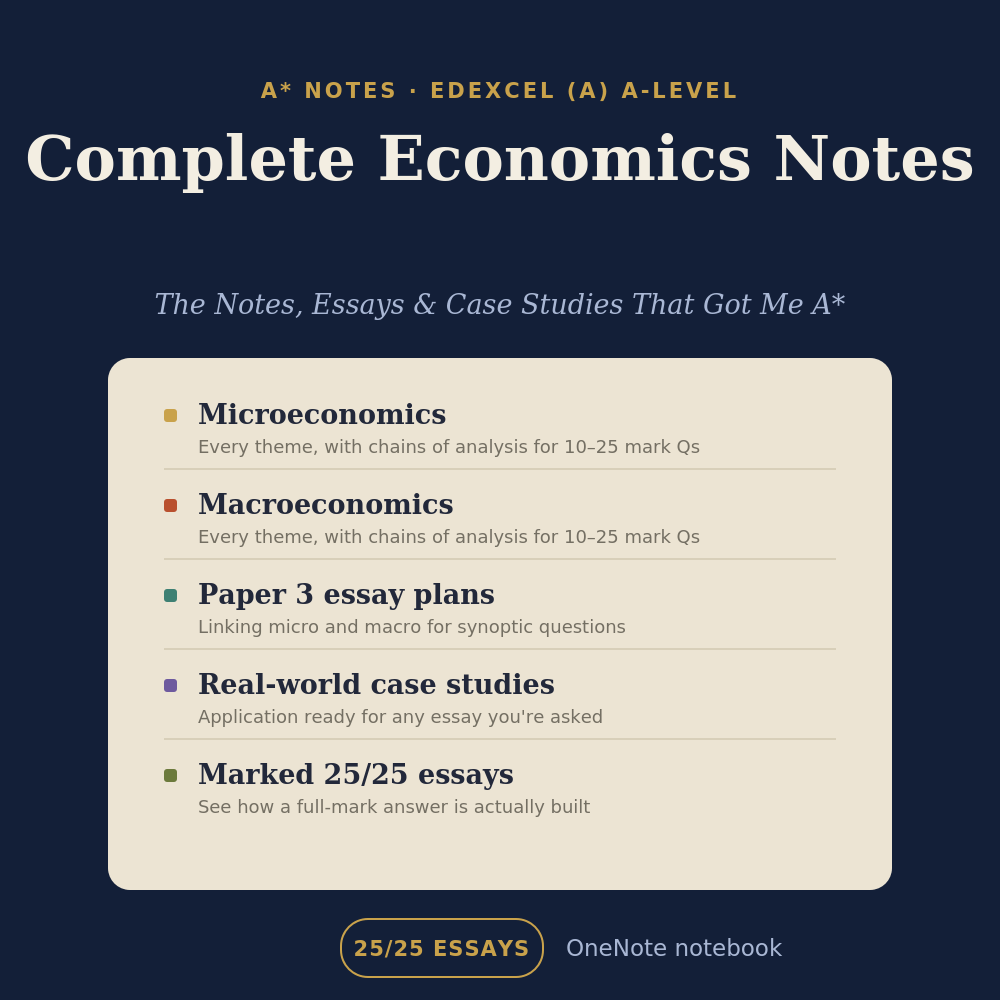
A complete set of Edexcel A-Level Economics notes, covering the full specification from Microeconomics to Macroeconomics.
These are the exact OneNote notes and structure I used throughout my A-level, which helped me achieve an A* in Economics. They are organised to take you beyond simply learning the content and help you develop the analysis, application and evaluation needed to score highly in exams.
What's included
Microeconomics
Complete notes covering every Microeconomics theme and topic
Topic-by-topic explanations of key concepts
Chains of analysis throughout the notes for 10, 12, 15 and 25-mark questions
Macroeconomics
Complete notes covering every Macroeconomics theme and topic
Topic-by-topic explanations of key concepts
Chains of analysis throughout the notes for 10, 12, 15 and 25-mark questions
Paper 3 Essay Plans
Essay plans exploring links between Microeconomics and Macroeconomics
Designed to help you connect different parts of the specification and develop stronger evaluation
Real-World Application & Case Studies
Real case studies covering a range of industries and economic situations
Both Microeconomic and Macroeconomic examples
Essay plans showing how to apply these case studies to exam questions
Designed to help you develop stronger application and evaluation points
Marked Essays
A collection of my own exam essays, including essays that received 25/25
See how the knowledge, chains of analysis, application and evaluation come together in a high-scoring answer
OneNote format
The notes are provided as a OneNote notebook, using the exact structure I used when studying for my A-level.
You will need a Microsoft/OneNote account to access the notes.
OneNote makes it easy to search the full set of notes, navigate between topics and return to specific sections when revising.
This is the same system I used to organise my Economics revision and achieve an A*.
The exact OneNote structure I used to achieve an A*, including 25/25 marked essays and my approach to chains of analysis.
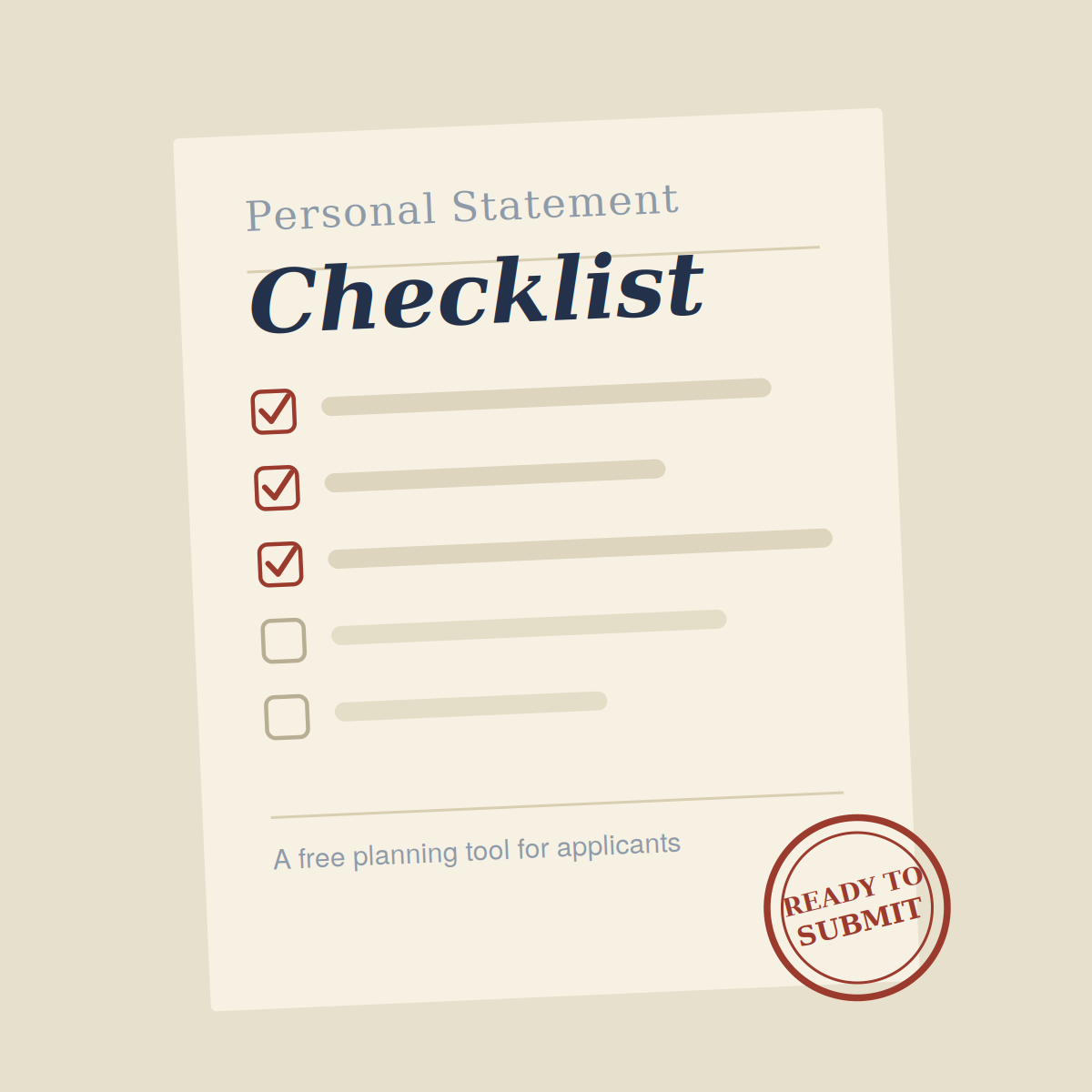
Applying to competitive universities such as Oxford, Cambridge, LSE, Imperial, UCL, and more? This free 2-page checklist will help you review and improve your personal statement before submitting it through UCAS.
Free Item Note: When you reach the billing section in Checkout, you can type any placeholder text (like '123 Main St' or random letters) to quickly pass through, as the system will not verify the address or postcode.
A final checklist for students aiming for top universities, covering the key things to check before submitting your UCAS personal statement.
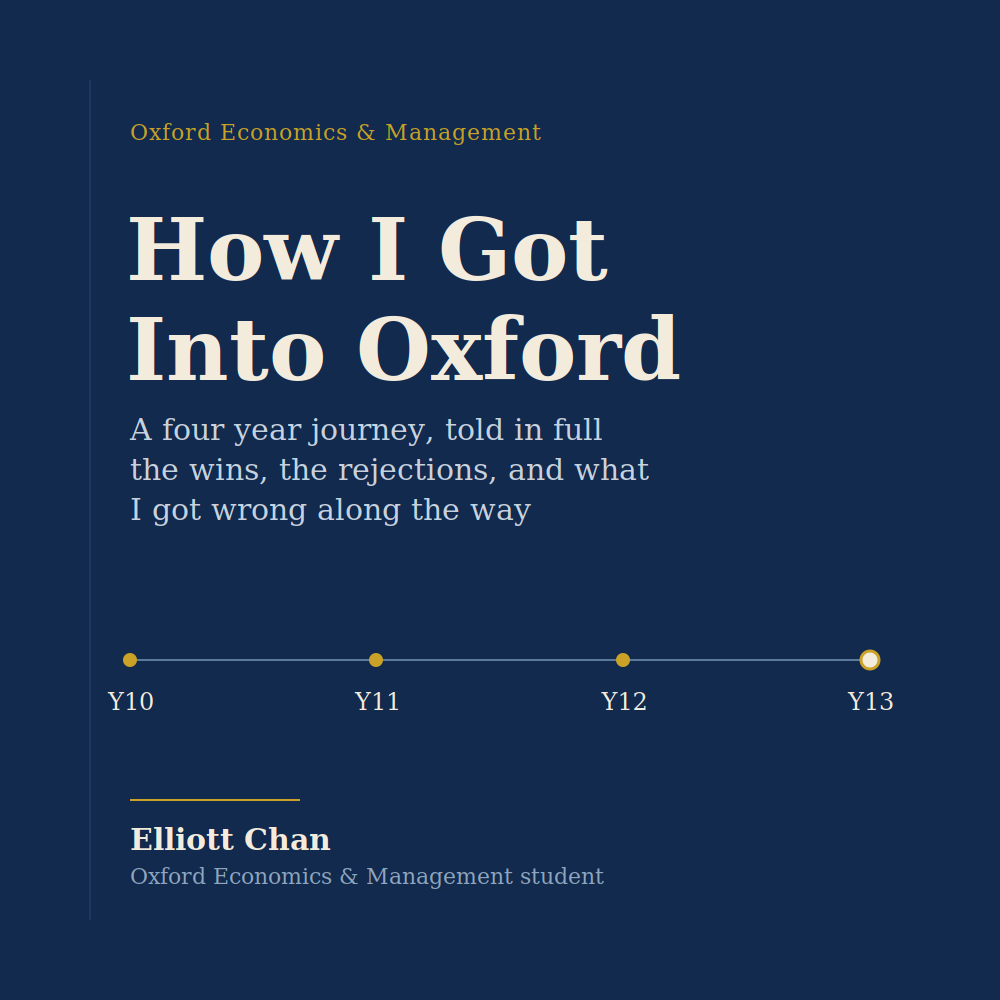
I got a conditional offer to study the most competitive course at Oxford. This is the whole story behind it, not the polished five minute version, the real one.
It starts in Year 10 with no idea what I wanted to study, and ends in Year 13 with an offer letter. In between there's a lot most people don't talk about: the essay prizes I entered and lost, the 30+ cold emails that got me nowhere, a rejection from my own school's officer team, a personal statement I had to rebuild from scratch after my first draft missed the point entirely, and the exact way I prepared for the admission test and interview once I finally understood what actually mattered.
Inside you'll find:
A clear year by year timeline of the whole process, from Year 10 through to results day
What I got wrong along the way, laid out honestly, including things I believed for years that turned out not to be true
How my personal statement went through 11 drafts and a full rewrite, and why
How I prepared for the admission test after a slow start
What actually happened in the week before my interview
A final reflection on what I think actually got me in, once I strip away everything that felt important at the time but wasn't
Who this is for:
Anyone applying to a competitive UK university, any subject, not just Economics. Also useful if you're a parent trying to understand what this process actually involves, or if you're still in Year 9 or 10 with no idea what you want to study yet. That's fine. I didn't either.
This is one person's real journey, not a guaranteed formula. But if you want to see what it actually looked like from the inside, this is it.
A four-year account of my Oxford journey, from Year 10 to receiving my offer, including the mistakes, setbacks and lessons along the way.
Not sure where to begin?
Start with my free Economics Reading List, covering everything from game theory to inequality, with a clear starting point for each topic.
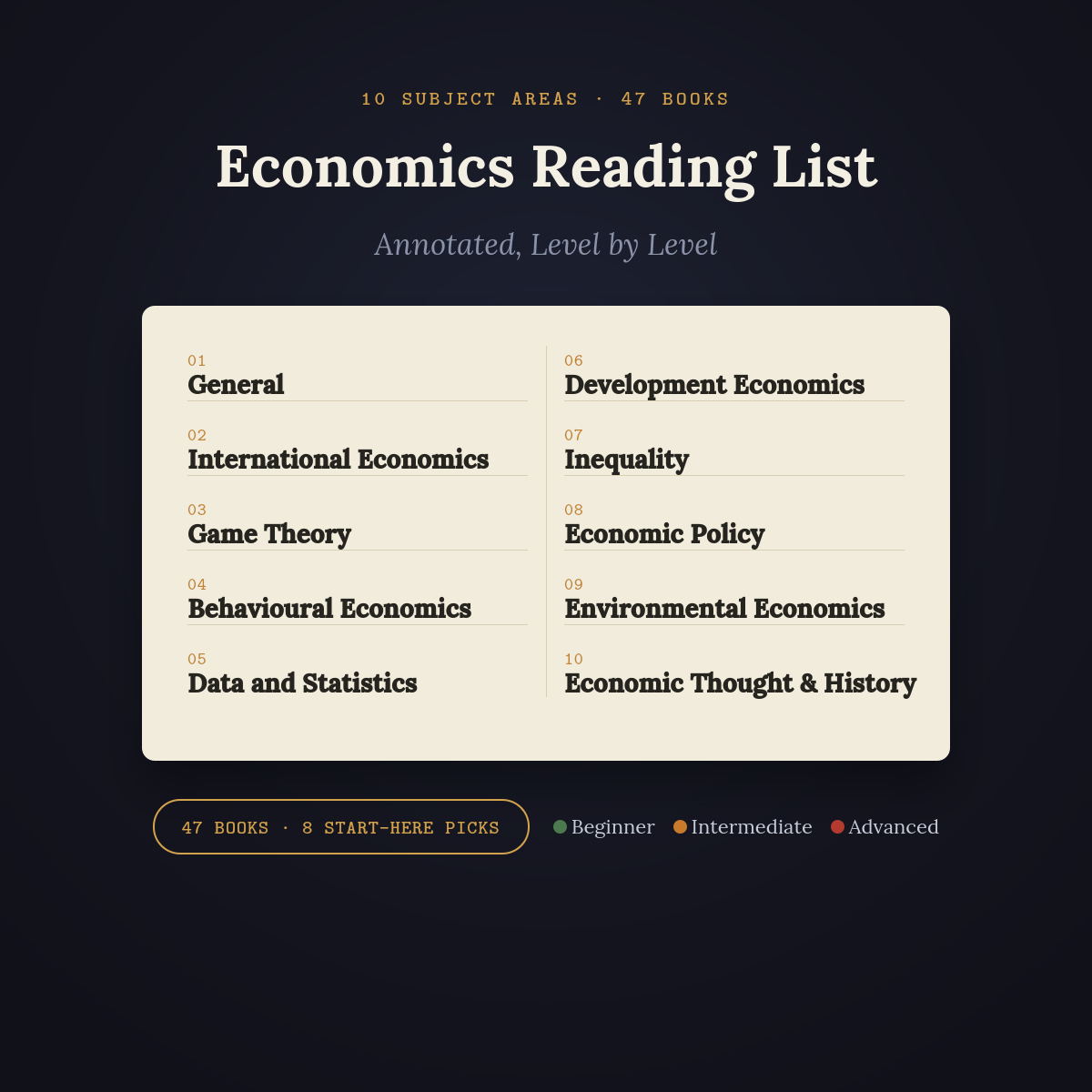
47 Books, Organised by What They Actually Argue
Most reading lists just drop names in a row. This one tells you what each book argues, how hard it is, and where it fits, so you build real, specific interest instead of ticking off titles you'll forget by interview day.
What's inside
47 books across 10 subject areas, from foundational to advanced
Every entry marked Beginner, Intermediate, or Advanced
8 "Start here" picks — the best entry point into each topic
"Good for" notes linking select books to personal statement angles or interview themes
A short guide with three reading pathways depending on where you're starting from
A worked example showing how to read one chapter properly and turn it into your own argument
The 10 subject areas
General · International Economics · Game Theory · Behavioural Economics · Data and Statistics · Development Economics · Inequality · Economic Policy · Environmental Economics · Economic Thought and History
Who it's for
Sixth formers and undergraduate applicants building a personal statement or prepping for an economics interview — or anyone who wants to get seriously into economics without wading through a hundred "top 10 books" listicles first.
How people use it
Just getting started: read the Start Here book from General plus two others that catch your eye
Building a specific angle: pick one subject area and read Beginner → Advanced
Prepping for interview: one chapter each from 6–8 books across different areas, so you can speak to more than you've fully read
Instant digital download.
Free Item Note: When you reach the billing section in Checkout, you can type any placeholder text (like '123 Main St' or random letters) to quickly pass through, as the system will not verify the address or postcode.
Finance and Careers
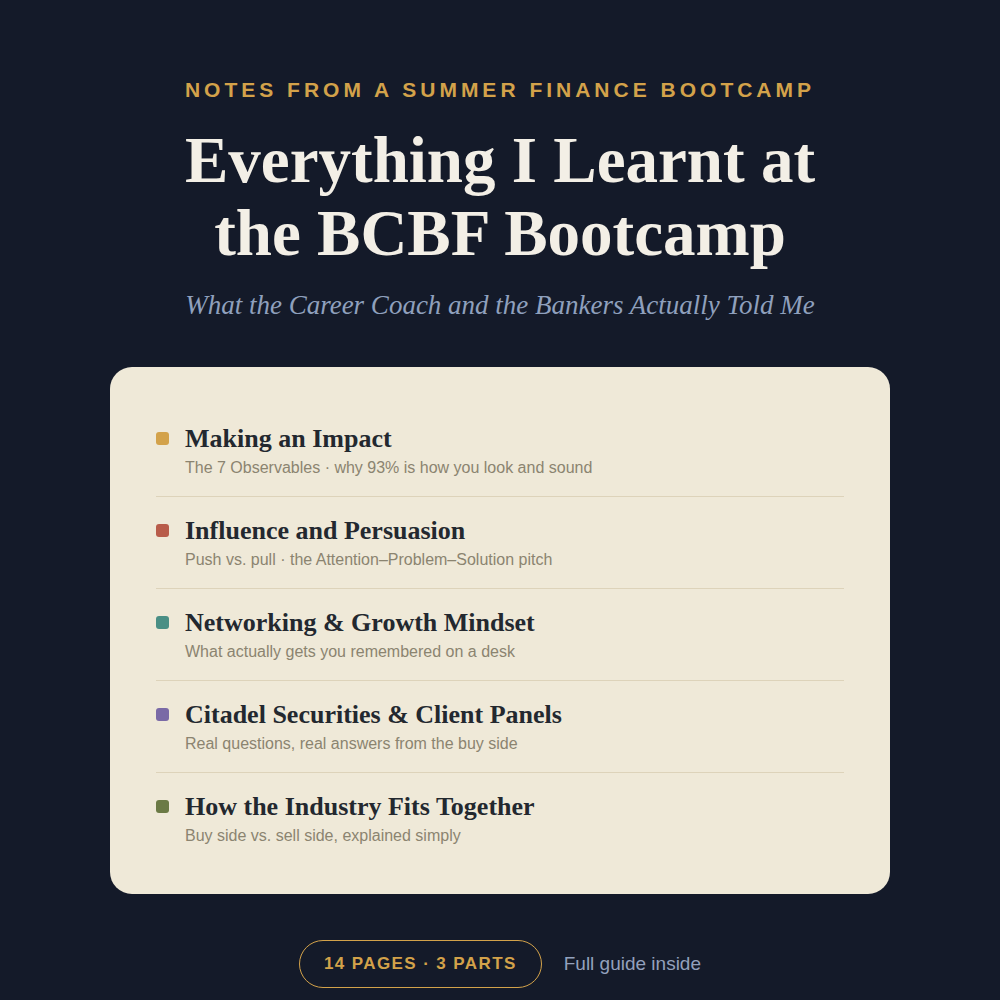
I spent a week at the Big City Bright Future (BCBF) Bootcamp before starting my two-week internship at AllianceBernstein.
The bootcamp covered far more than technical finance knowledge. We worked on the skills that actually matter when entering competitive industries: networking, communication, presenting, influencing, personal branding, interview preparation, and professional behaviour.
I took detailed notes throughout the week and turned them into one document covering everything I learnt, including the advice, frameworks and practical lessons I found most useful.
What's inside
How to make a strong first impression
Networking and building genuine professional relationships
How to communicate effectively in a professional environment
Presentation and public-speaking skills
How to influence and persuade others
Professional etiquette and workplace behaviour
Lessons and advice from industry professionals
My own takeaways and reflections from the bootcamp
This is particularly useful for students preparing for BCBF, spring weeks, internships, insight programmes, or their first professional experience.
Rather than giving you a generic list of career tips, this document captures the lessons I personally took away from a week of intensive preparation before entering a global investment firm.
Free Item Note: When you reach the billing section in Checkout, you can type any placeholder text (like '123 Main St' or random letters) to quickly pass through, as the system will not verify the address or postcode.
My key takeaways from the Big City Bright Future (BCBF) bootcamp, including lessons from career coach Seth Wainwright and industry professionals.
This is a personal write-up of my own notes from the BCBF bootcamp, put together for other students who are either applying to the programme or trying to break into financial services.

About Me
Hi, I'm Elliott.
I'm an Oxford Economics & Management student who enjoys sharing what I've learnt along the way.
I created this website to share the resources, frameworks and lessons I wish I had when I was applying to university and starting my academic and career journey.
From A-levels to applying to Oxford and exploring early careers in finance, everything here is based on my own experiences, mistakes and what has worked for me.
Outside of academics, I spend much of my time playing table tennis, creating content and working on projects of my own.
Looking for more detailed resources?
I scored 50/50 on my EPQ. This is everything I did to get there.
The EPQ is one of the most confusing parts of sixth form: vague mark schemes, little guidance from school, and almost no good examples to learn from. This guide fixes that.
Inside, you'll get a clear breakdown of how to choose a strong title, structure your project so it actually meets the mark scheme, write a production log that doesn't waste your time, and prepare for the viva without panicking the night before. Every piece of advice comes from what actually got me full marks, not generic theory.
This isn't a template to copy. It's a guide to help you think the way a top scoring EPQ requires, so whatever your topic, you walk away with a project you're genuinely proud of, and the grade to match.
What's included:
Full breakdown of the EPQ mark scheme and what examiners actually reward
How to choose and refine a title that sets you up to succeed
Structuring your project and production log
Planning and monitoring your research
Preparing for your research report and the presentation
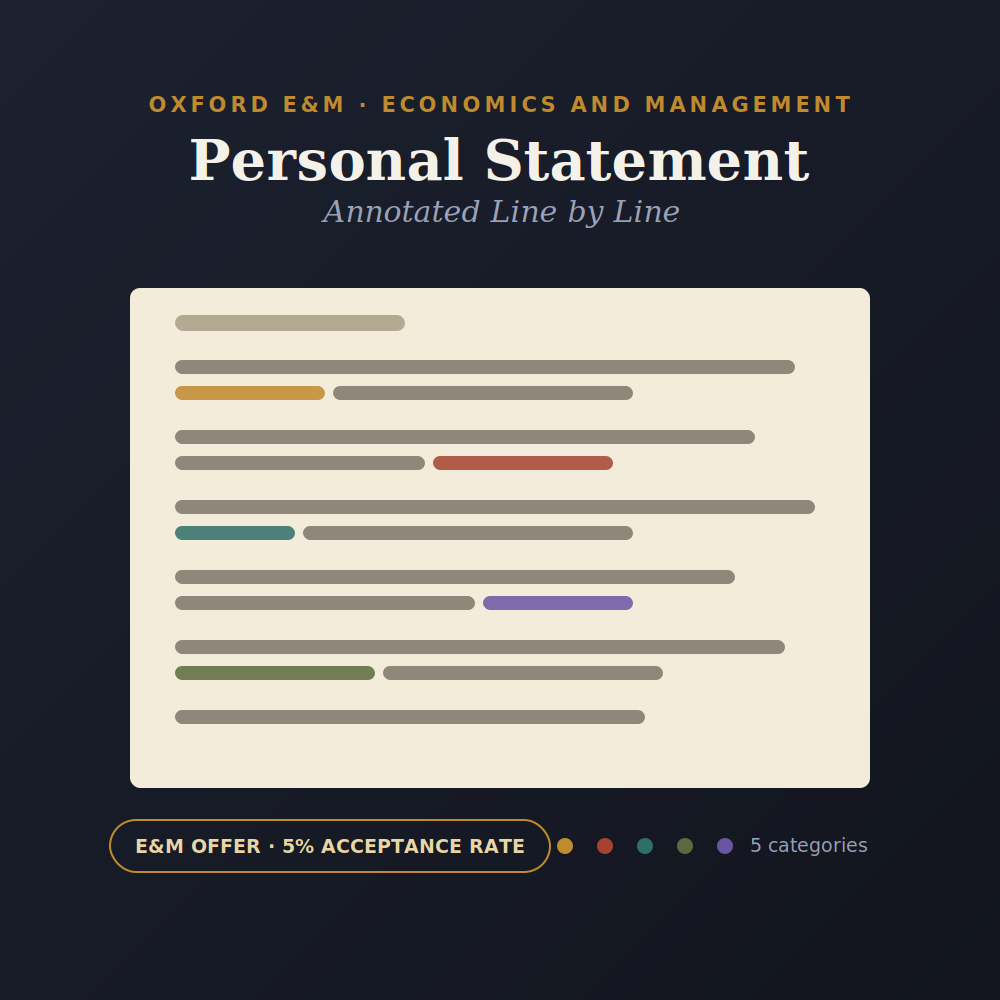
A real personal statement that received an Oxford Economics and Management offer, broken down phrase by phrase so you can see exactly what each sentence is doing and why it works.
Every highlighted line is tagged and explained: where the hook comes from, where an original argument is being made, where two sources are put in conversation with each other, which lines are pure super-curricular evidence, and which lines tie straight back to the course. Click any highlight to read the reasoning behind it.
This is not a generic checklist or a list of dos and don'ts. It is one full statement taken apart in front of you, so you can see what strong critical thinking actually looks like on the page.
What you get:
The full annotated statement as an interactive file that opens in any browser, desktop or mobile
21 annotations across five categories: hook, original argument, synthesis, super-curricular evidence, course link
A category system you can reuse when reviewing your own drafts
Best for Economics, Economics and Management, and related applicants preparing statements for competitive UK universities.
Want your own personal statement reviewed this way? Drop me an email at [elliottaaaa@gmail.com].
GCSE English Literature Notes (20+ pages per text)
As someone who achieved a Grade 9 in GCSE English Literature, I’ve created these notes to be clear, structured, and exam-focused.
Each set contains over 20 pages of carefully organised content, including key quotes for each character and main theme, along with detailed analysis and essay plans.
The quotes and analysis are designed to be broad and flexible, allowing you to adapt them to different exam questions with ease. Instead of memorising rigid answers, you’ll have adaptable points you can apply across a range of essay prompts.
Perfect for revision, essay planning, and last-minute exam preparation.
1-to-1 Support
Personalised guidance when you need more than a resource.
How it works
-
Share your situation and what you want to work on.
-
We work through your questions and identify specific next steps.
-
You’ll know exactly what to work on next.