
Tools you can use today.
I create resources like guides, checklists, templates and comparison tables to help students take control of their own applications.
My Oxford Application Journey
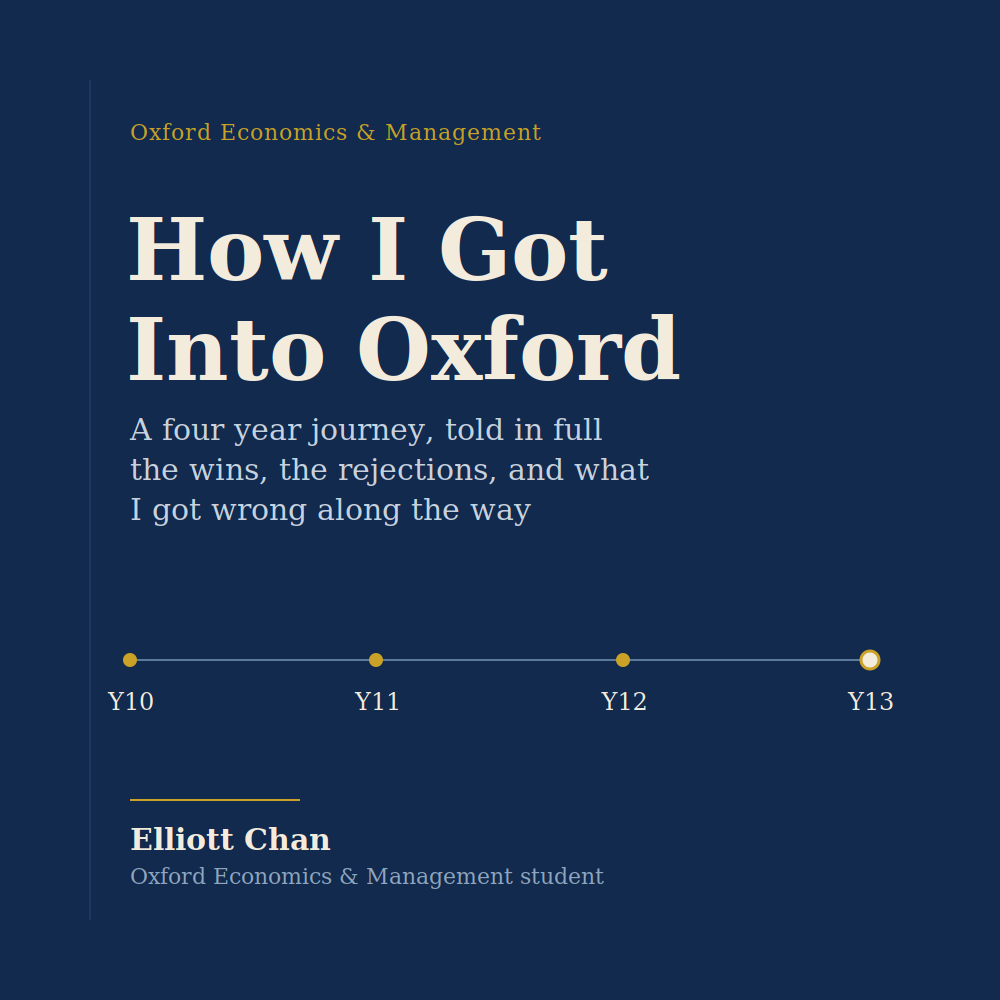
I got a conditional offer to study the most competitive course at Oxford. This is the whole story behind it, not the polished five minute version, the real one.
It starts in Year 10 with no idea what I wanted to study, and ends in Year 13 with an offer letter. In between there's a lot most people don't talk about: the essay prizes I entered and lost, the 30+ cold emails that got me nowhere, a rejection from my own school's officer team, a personal statement I had to rebuild from scratch after my first draft missed the point entirely, and the exact way I prepared for the admission test and interview once I finally understood what actually mattered.
Inside you'll find:
A clear year by year timeline of the whole process, from Year 10 through to results day
What I got wrong along the way, laid out honestly, including things I believed for years that turned out not to be true
How my personal statement went through 11 drafts and a full rewrite, and why
How I prepared for the admission test after a slow start
What actually happened in the week before my interview
A final reflection on what I think actually got me in, once I strip away everything that felt important at the time but wasn't
Who this is for:
Anyone applying to a competitive UK university, any subject, not just Economics. Also useful if you're a parent trying to understand what this process actually involves, or if you're still in Year 9 or 10 with no idea what you want to study yet. That's fine. I didn't either.
This is one person's real journey, not a guaranteed formula. But if you want to see what it actually looked like from the inside, this is it.
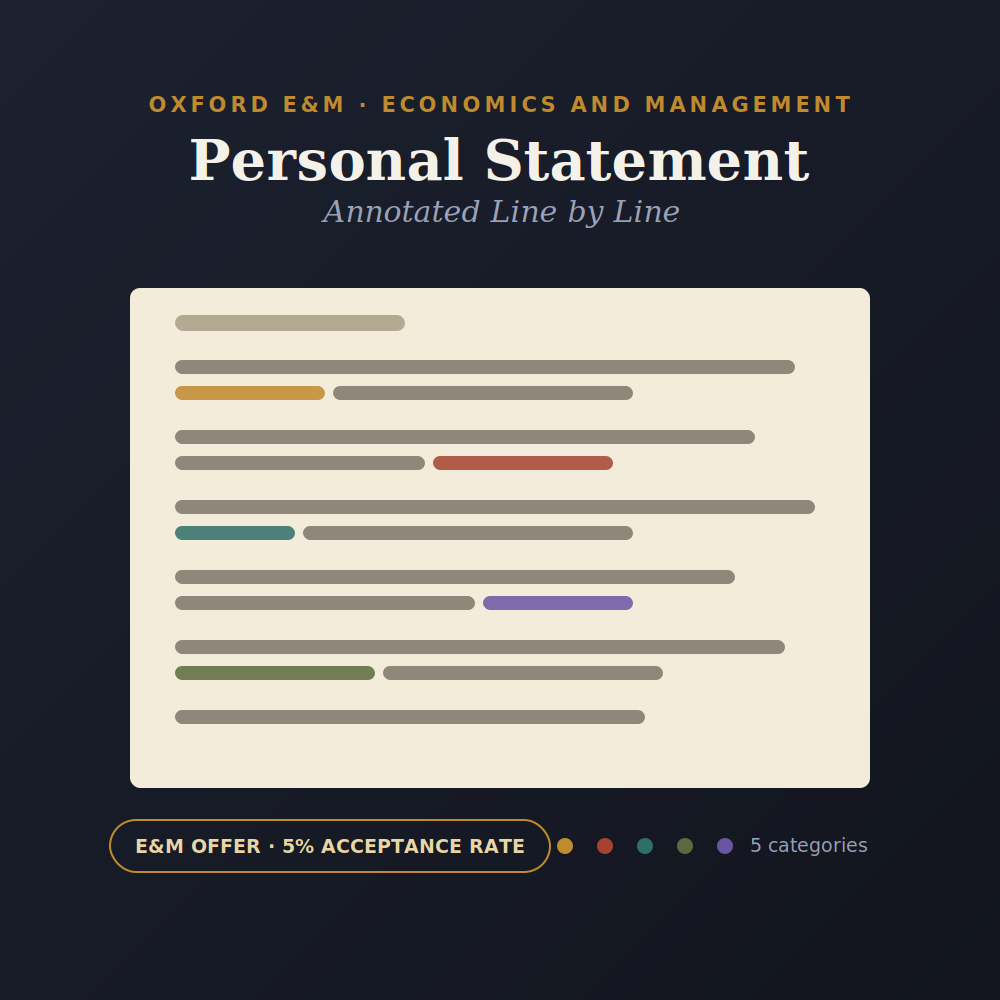
A real personal statement that received an Oxford Economics and Management offer, broken down phrase by phrase so you can see exactly what each sentence is doing and why it works.
Every highlighted line is tagged and explained: where the hook comes from, where an original argument is being made, where two sources are put in conversation with each other, which lines are pure super-curricular evidence, and which lines tie straight back to the course. Click any highlight to read the reasoning behind it.
This is not a generic checklist or a list of dos and don'ts. It is one full statement taken apart in front of you, so you can see what strong critical thinking actually looks like on the page.
What you get:
The full annotated statement as an interactive file that opens in any browser, desktop or mobile
21 annotations across five categories: hook, original argument, synthesis, super-curricular evidence, course link
A category system you can reuse when reviewing your own drafts
Best for Economics, Economics and Management, and related applicants preparing statements for competitive UK universities.
Want your own personal statement reviewed this way? Drop me an email at [elliottaaaa@gmail.com].
Personal Statement
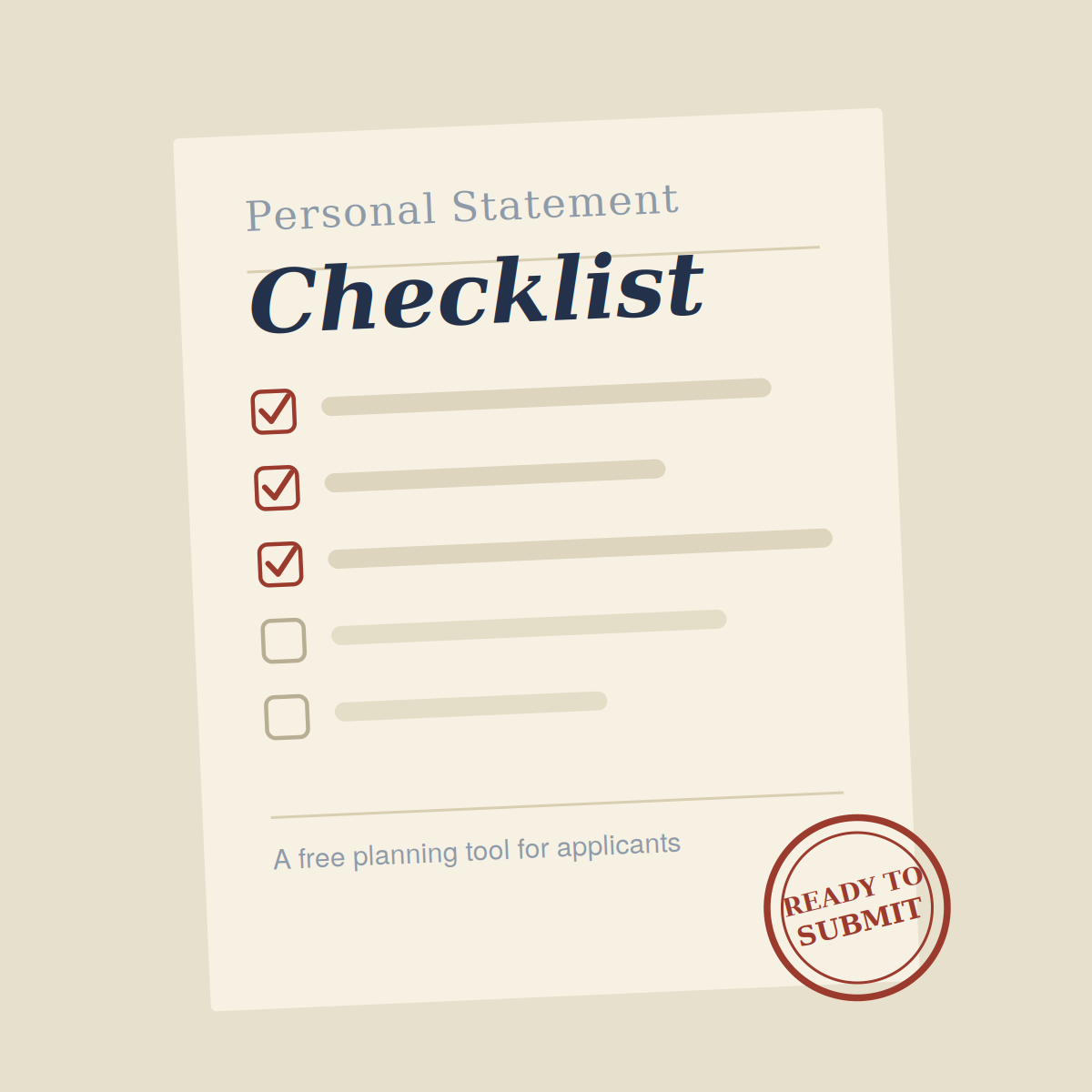
Applying to competitive universities such as Oxford, Cambridge, LSE, Imperial, UCL, and more? This free 2-page checklist will help you review and improve your personal statement before submitting it through UCAS.
Free Item Note: When you reach the billing section in Checkout, you can type any placeholder text (like '123 Main St' or random letters) to quickly pass through, as the system will not verify the address or postcode.
Admission Test
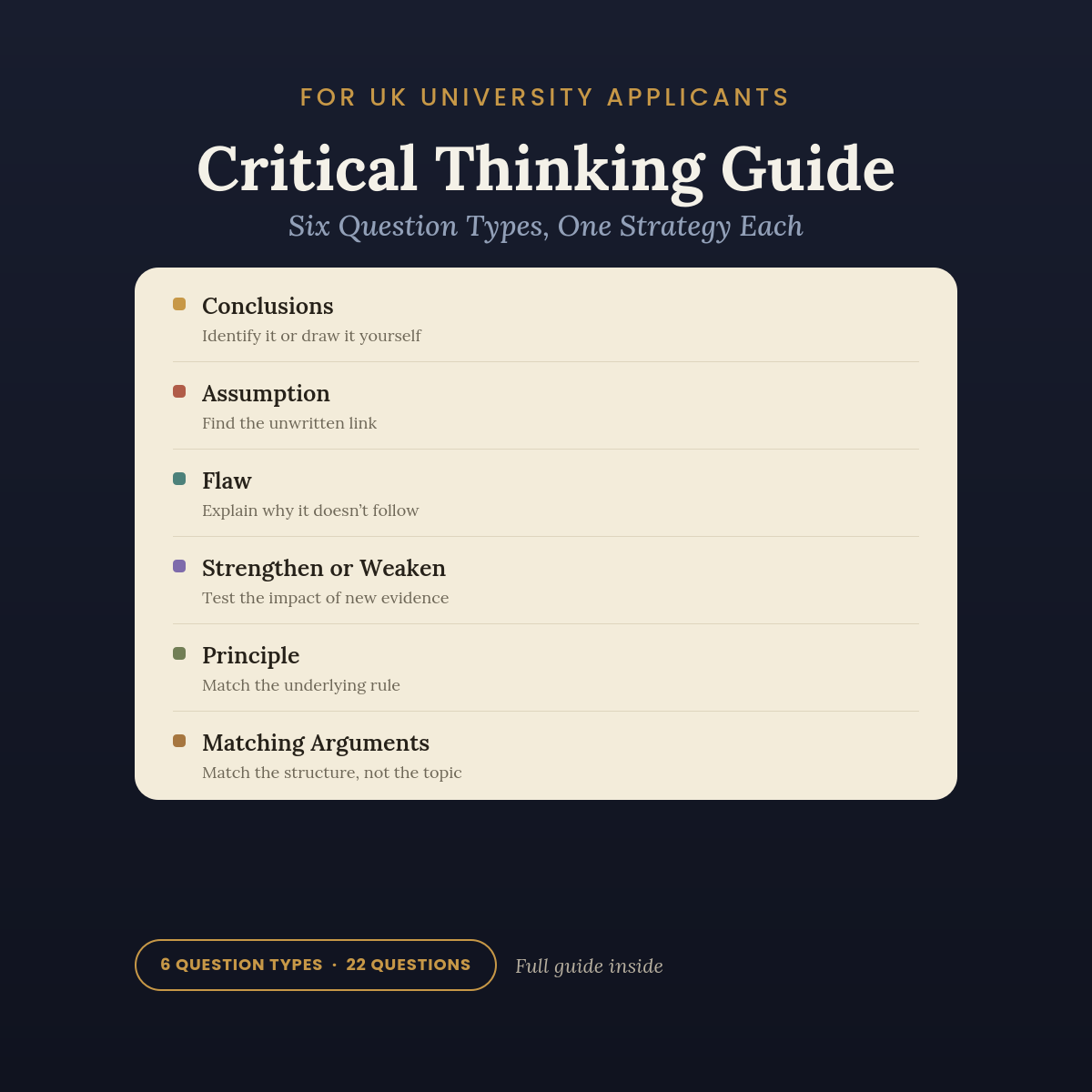
Preparing for the TARA (Thinking Skills Assessment)?
This concise guide breaks down the Critical Thinking section into six question types, with practical methods for approaching each one and the common traps to avoid.
What’s inside
6 core question types:
Conclusions
Assumptions
Detecting Reasoning Errors
Weakening or Strengthening an Argument
Applying Principles
Matching Arguments
For each type, you’ll learn what the question is testing, how to approach it, and what to look out for in the answer choices.
The guide also includes useful techniques such as the “therefore” test, “not” test, and converting arguments into simple X/Y logical structures.
Who is this for?
The TARA is used as part of admissions for a range of Oxford courses, including PPE, Economics and Management, Economics, History and others.
Whether you’re just starting your preparation or looking for a concise refresher before the test, this guide is designed to help you recognise the underlying logic behind the questions rather than simply memorise answers.
Quick reference
The final section brings together the key reminders to keep in mind when you sit the test, including how to handle assumptions, conclusions, strengthening/weakening questions and matching arguments.
4 pages | 6 question types | Practical strategies
Free Item Note: When you reach the billing section in Checkout, you can type any placeholder text (like '123 Main St' or random letters) to quickly pass through, as the system will not verify the address or postcode.
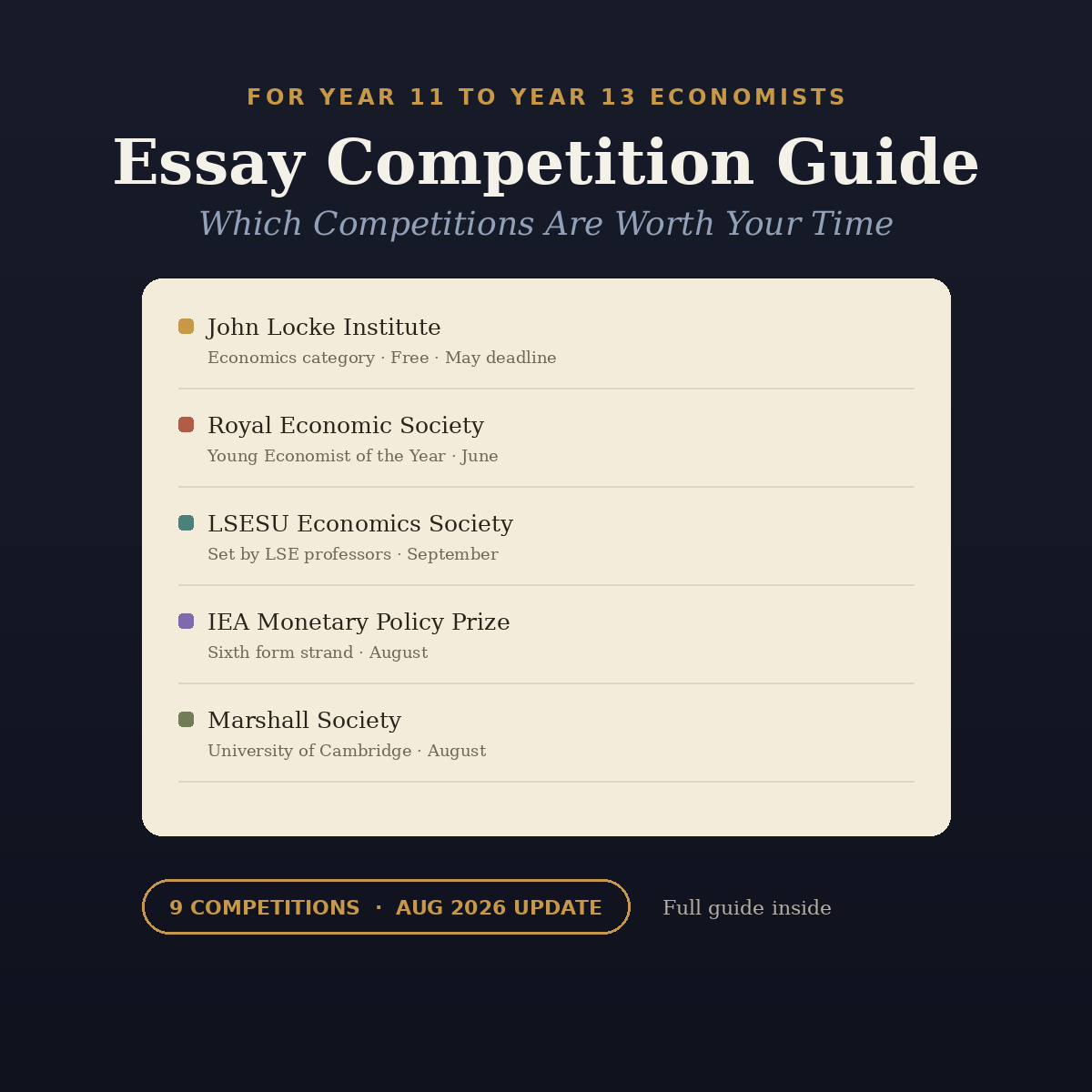
A complete guide breaking down 9 Economics essay competitions available to students in Years 11–13 in the UK, including competitions run by the John Locke Institute, LSE, Cambridge’s Marshall Society, Oxford Economics Society, and more.
For each competition, you’ll find:
Who is eligible to enter
The deadline
Word count requirements
Prizes
How difficult it realistically is to get shortlisted
Whether I think it is actually worth your time
The guide also includes a monthly deadline calendar, so you can keep track of upcoming competitions without worrying about missing an important deadline. I’ll also explain which competitions are most suitable for Year 11, Year 12 and Year 13 students.
More importantly, I’ll show you how to use essay competitions to strengthen your UCAS Personal Statement, rather than simply writing “I participated in X competition” and leaving it at that.
All information has been checked against official sources, so you can clearly understand what you are entering, when the deadlines are, and whether each competition is worth investing your time in.
Free Item Note: When you reach the billing section in Checkout, you can type any placeholder text (like '123 Main St' or random letters) to quickly pass through, as the system will not verify the address or postcode.
Super-curricular
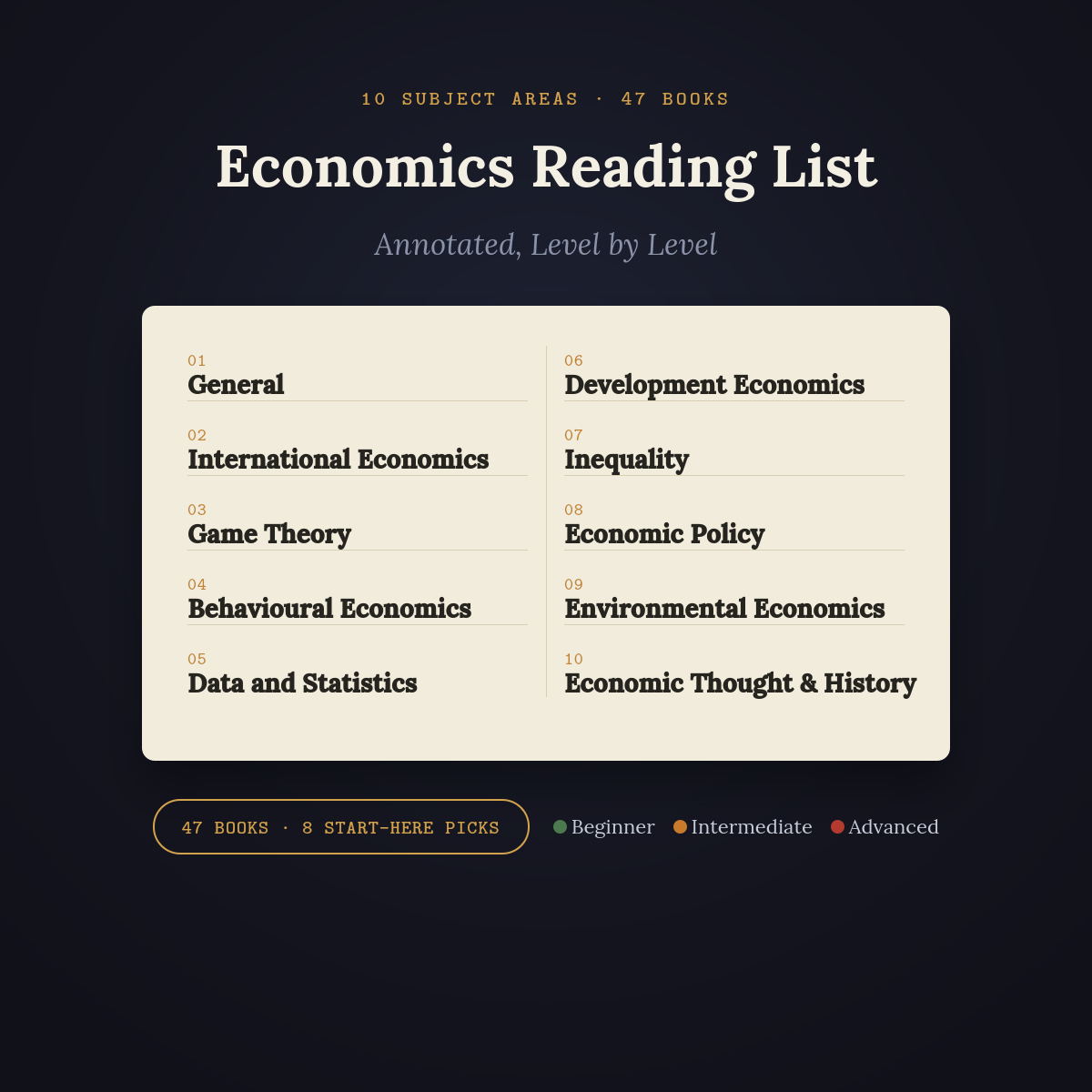
47 Books, Organised by What They Actually Argue
Most reading lists just drop names in a row. This one tells you what each book argues, how hard it is, and where it fits, so you build real, specific interest instead of ticking off titles you'll forget by interview day.
What's inside
47 books across 10 subject areas, from foundational to advanced
Every entry marked Beginner, Intermediate, or Advanced
8 "Start here" picks — the best entry point into each topic
"Good for" notes linking select books to personal statement angles or interview themes
A short guide with three reading pathways depending on where you're starting from
A worked example showing how to read one chapter properly and turn it into your own argument
The 10 subject areas
General · International Economics · Game Theory · Behavioural Economics · Data and Statistics · Development Economics · Inequality · Economic Policy · Environmental Economics · Economic Thought and History
Who it's for
Sixth formers and undergraduate applicants building a personal statement or prepping for an economics interview — or anyone who wants to get seriously into economics without wading through a hundred "top 10 books" listicles first.
How people use it
Just getting started: read the Start Here book from General plus two others that catch your eye
Building a specific angle: pick one subject area and read Beginner → Advanced
Prepping for interview: one chapter each from 6–8 books across different areas, so you can speak to more than you've fully read
Instant digital download.
Free Item Note: When you reach the billing section in Checkout, you can type any placeholder text (like '123 Main St' or random letters) to quickly pass through, as the system will not verify the address or postcode.
University Courses
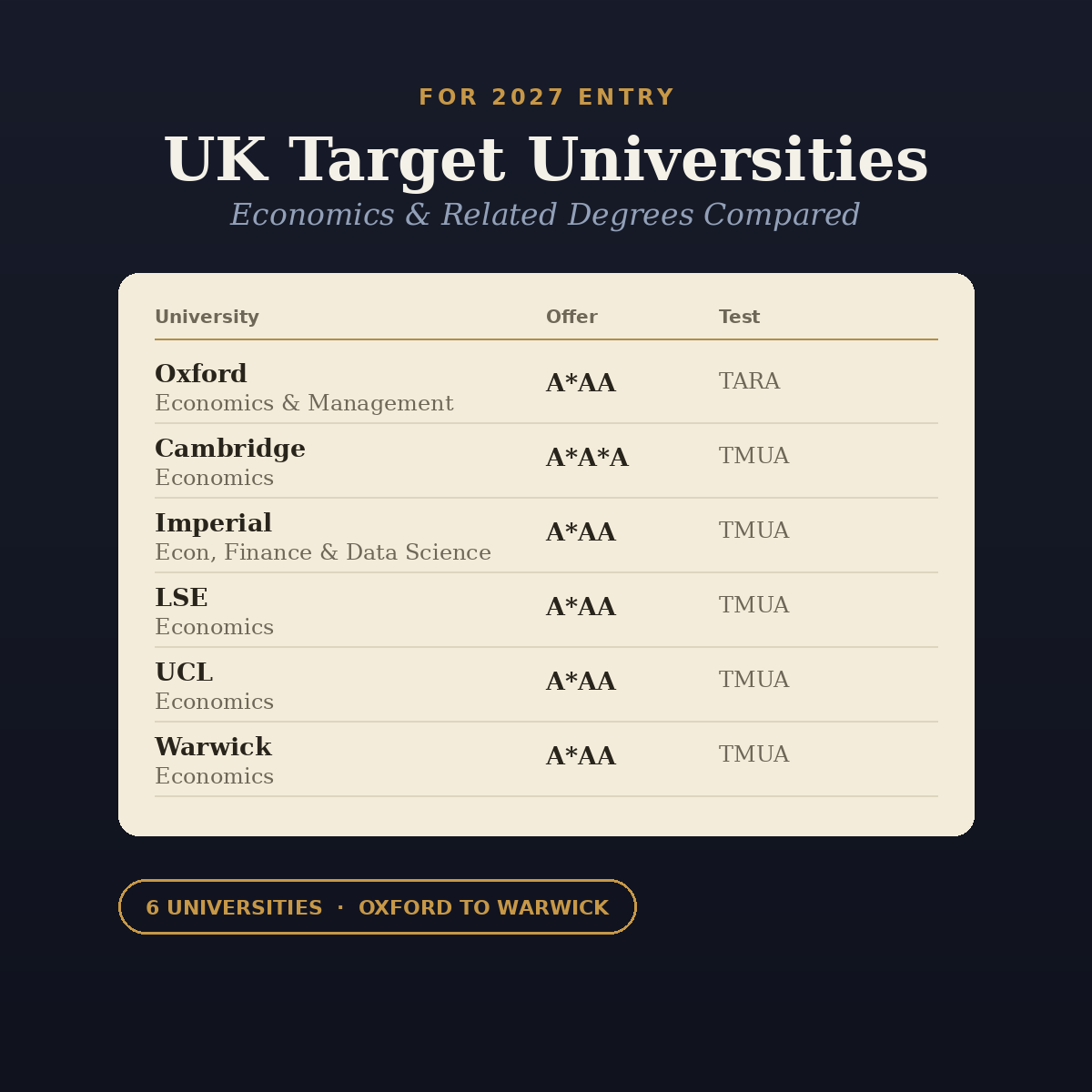
This guide compares Economics courses at Oxford, Cambridge, Imperial, LSE, UCL and Warwick, covering:
Entry requirements: A-level requirements, required subjects, and whether Maths and Further Maths are required or recommended
Admissions tests: Which tests you need to take and whether they are compulsory
Interviews: Whether interviews are used, who gets interviewed, and what the interview process looks like
Who each university suits: How the course and admissions process differ, and what type of student may be best suited to each university
Acceptance rates: How competitive each university is and how likely applicants are to receive an offer
Free Item Note: When you reach the billing section in Checkout, you can type any placeholder text (like '123 Main St' or random letters) to quickly pass through, as the system will not verify the address or postcode.
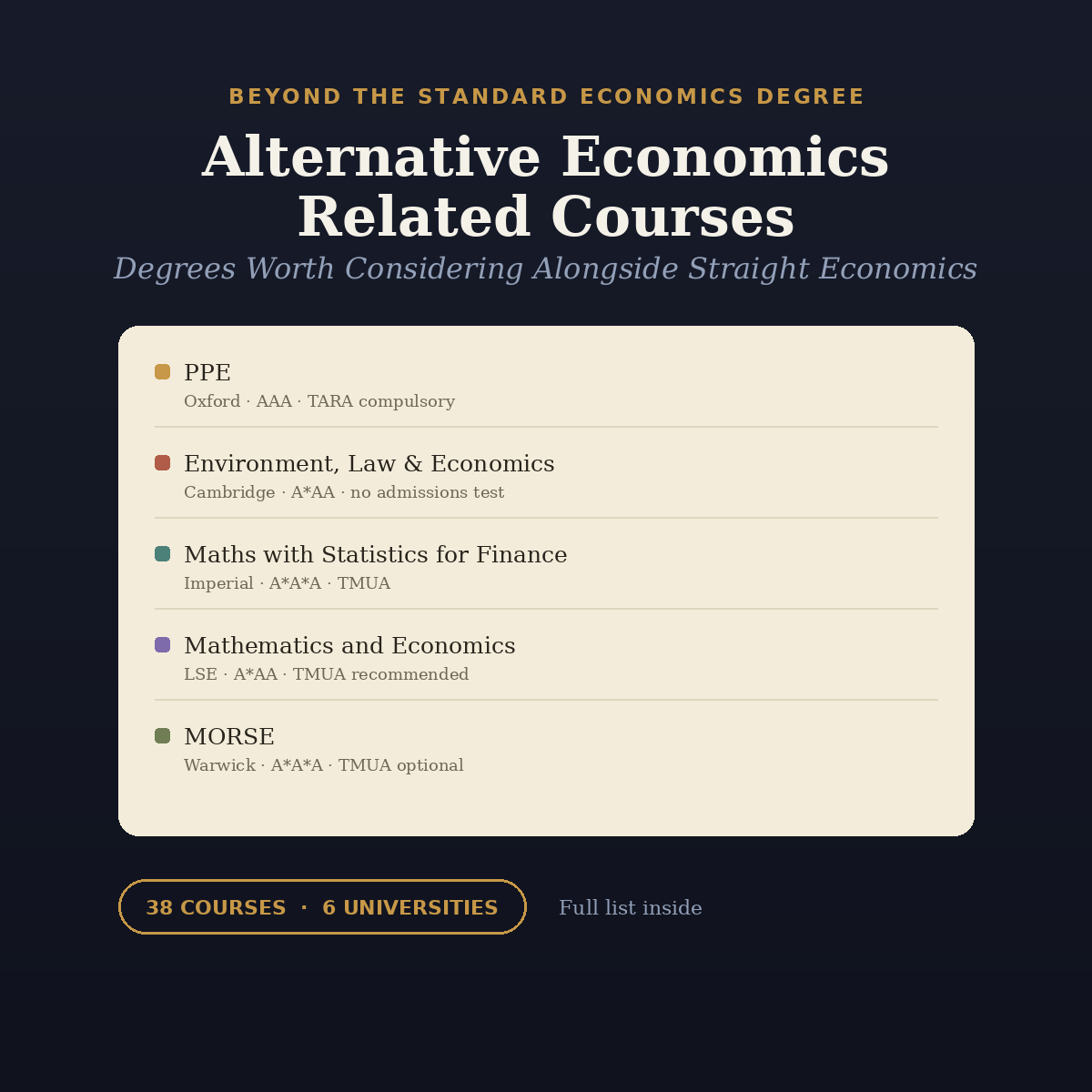
Want to study Economics, but don’t want to compete for the most oversubscribed Economics courses?
This guide brings together a range of Economics-related courses (38 courses in total!) at Oxford, Cambridge, LSE, UCL and Warwick.
While these courses aren’t traditional Economics degrees, many are closely related to economics, finance and business, and some can offer even more practical career pathways than a pure Economics degree.
Most importantly, they give you another way to benefit from the academic reputation of a target university, while potentially avoiding the intense competition for its most popular Economics course.
The guide covers:
Entry requirements: A-level requirements, required subjects, and whether Maths and Further Maths are required or recommended
Admissions tests: Which tests you need to take and whether they are compulsory
Interviews: Whether interviews are used, who gets interviewed, and what the interview process looks like
Who each course suits: Which types of students may be best suited to each course and its admissions process